Exploring Within-Year Assessments

Within-year assessments aren’t one-size-fits-all. This slide deck explores the different purposes they serve and how each type supports educators and students.
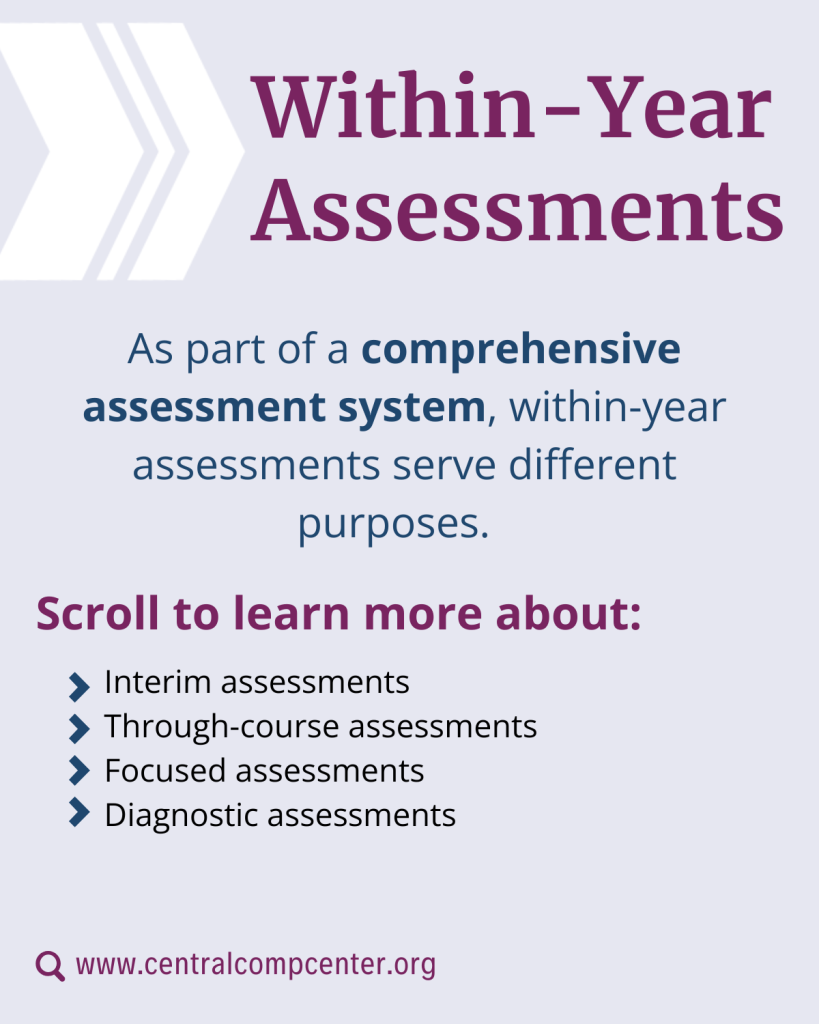
Within-Year
Assessments
As part of a comprehensive
assessment system, within-year
assessments serve different
purposes.
Scroll through to learn about: Interim assessments
Through-course assessments
Focused assessments
Diagnostic assessments
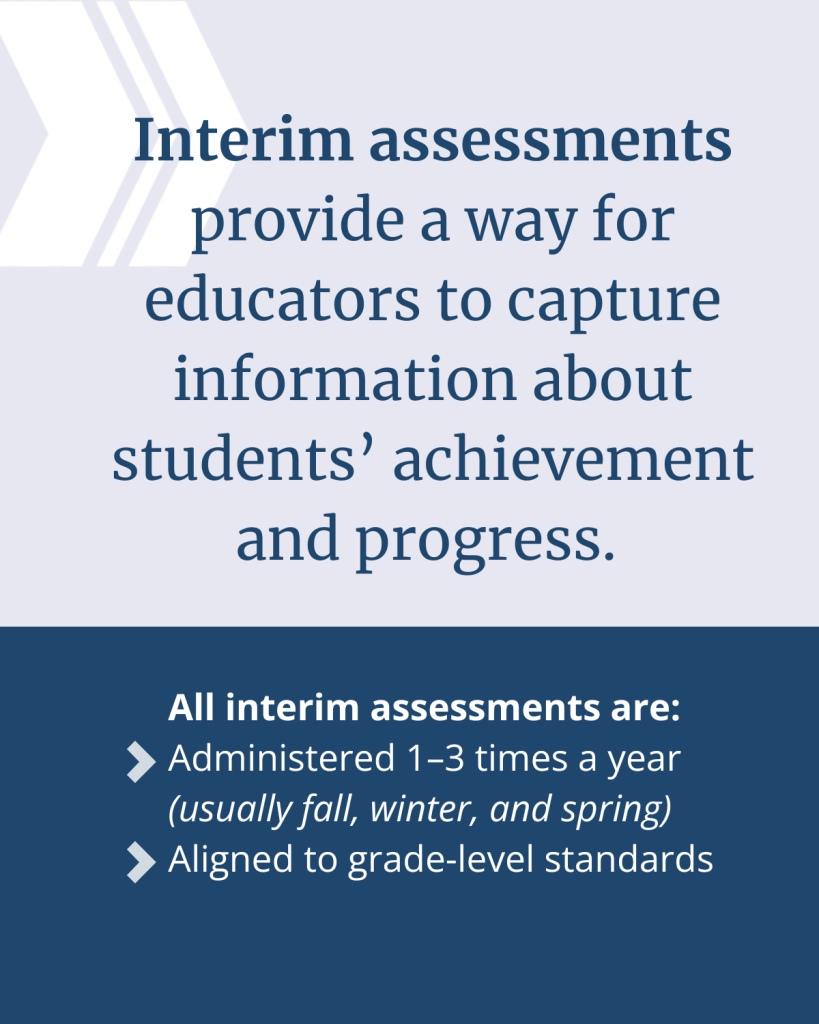
Interim assessments
provide a way for
educators to capture
information about
students’ achievement
and progress. All interim assessments are:
Administered 1–3 times a year
(usually fall, winter, and spring)
Aligned to grade-level standards
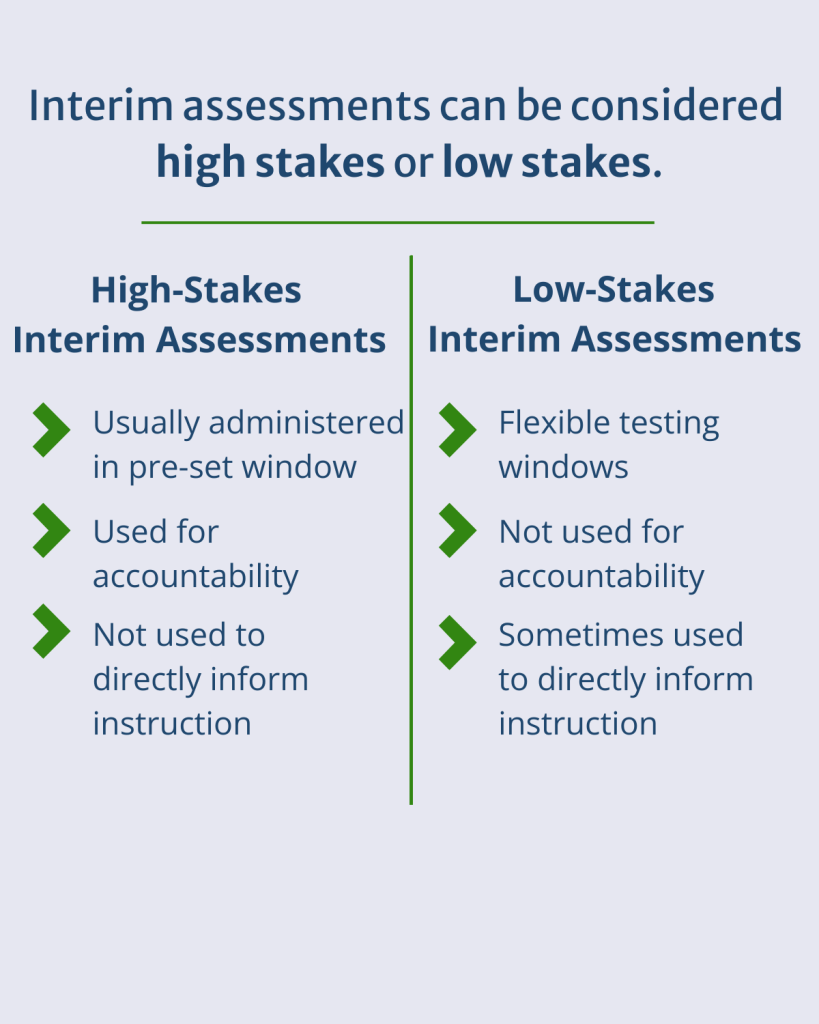
Interim assessments can be considered high stakes or low stakes.
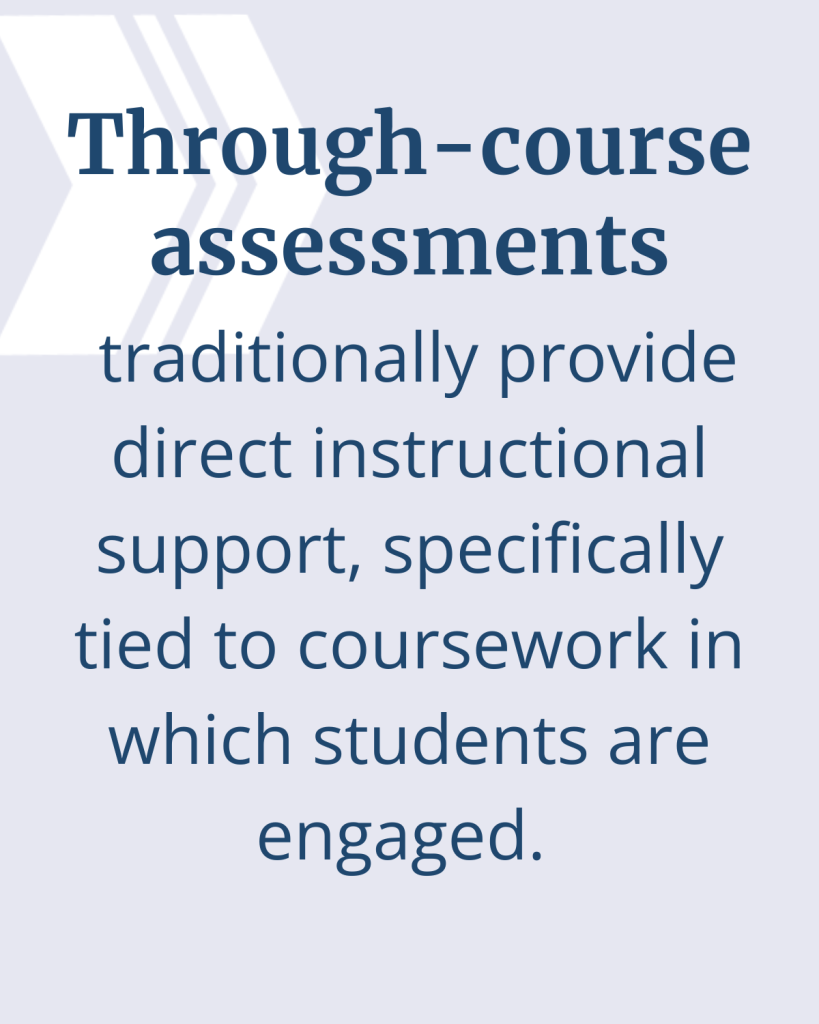
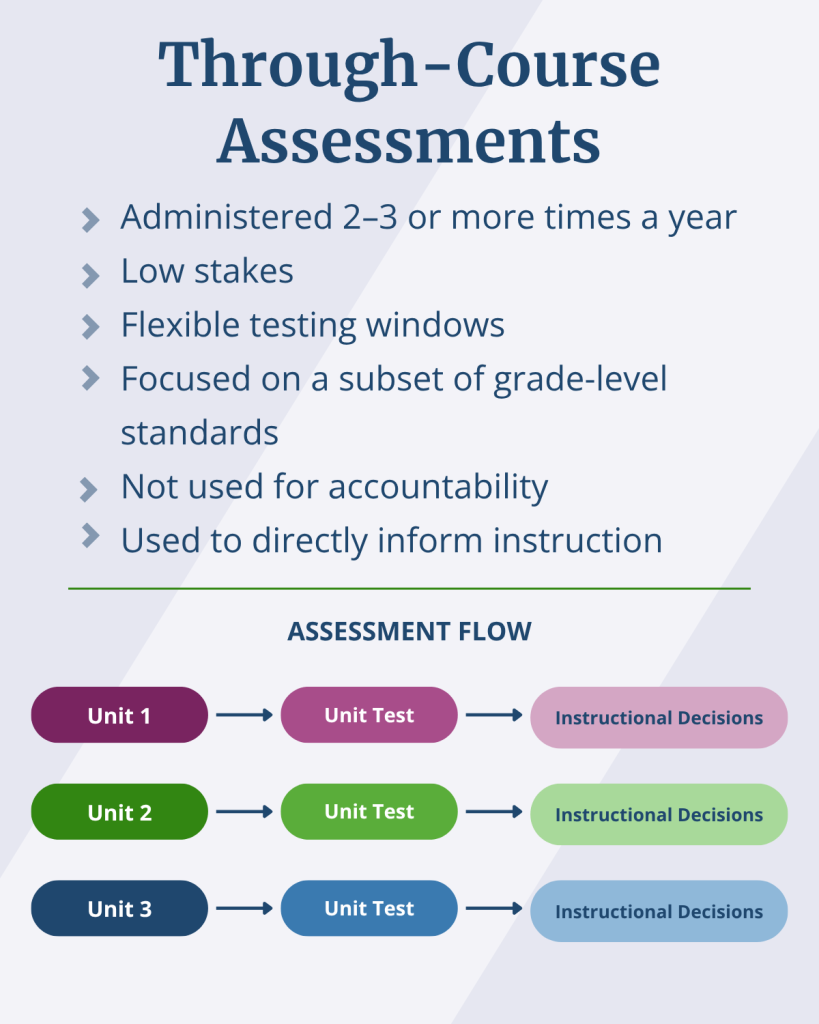
Through-course assessments traditionally provide direct instructional support, specifically tied to coursework in which students are engaged.
Through-Course
Assessments:
Administered 2–3 or more times a year
Low stakes
Flexible testing windows
Focused on a subset of grade-level standards
Not used for accountability
Used to directly inform instruction
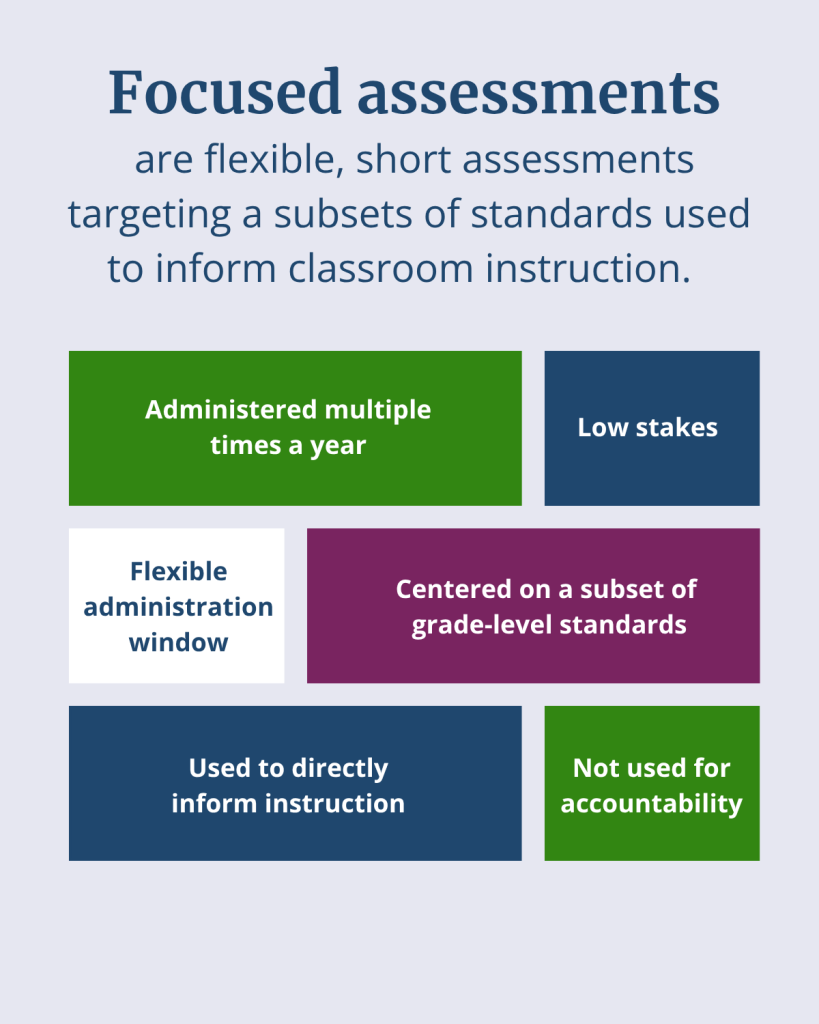
Focused assessments are flexible, short assessments targeting a subsets of standards used
to inform classroom instruction.
Diagnostic assessments identify student
strengths and areas that need
improvement or
additional support
prior to instruction.
Many diagnostic assessments are
administered before the school year begins—or early in the school year—to provide guidance about what types of supports students need to successfully engage in grade-level coursework.
Diagnostic assessments: Much like focused
assessments, these are
administered multiple times a year, are low stakes, are not
used for accountability, and are used to directly inform instruction.
Key differences are these
assessments may have a preset
test window for
administration, and they may
focus on a subset of grade level
standards.
Check out our
blog series on
comprehensive
assessment
systems to learn
more!
centralcompcenter.org